Quality Tree Service
Tree & Plant Health Care
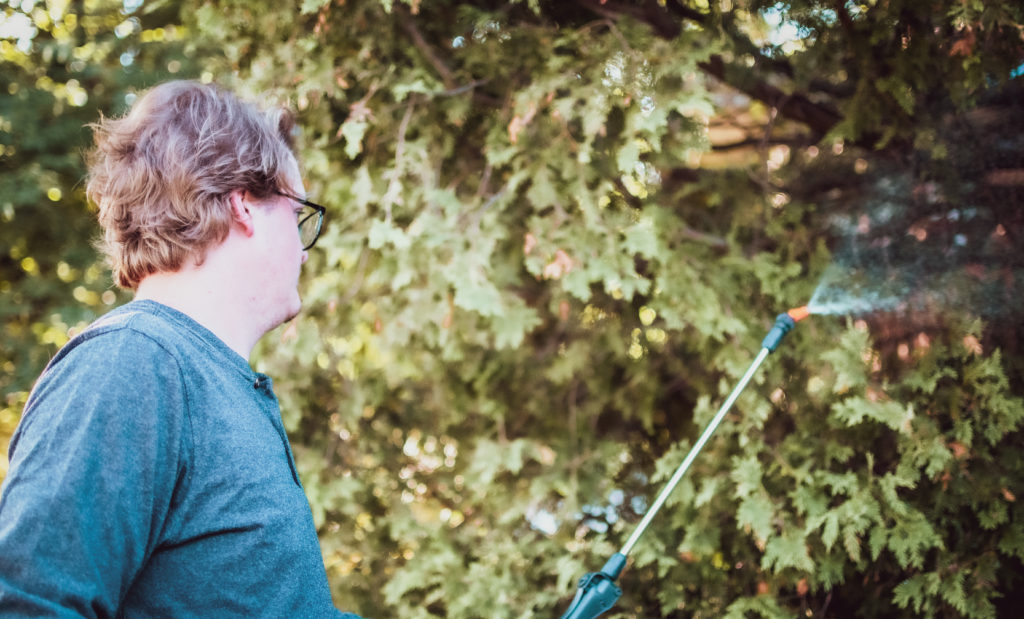
Gone are the days of simply dousing trees and shrubs with pesticides and hoping for the best. Through careful monitoring and adaptive strategies, I help create healthy trees by targeting pests and diseases selectively while promoting a healthier, more resilient ecosystem on your property. That’s why you should call the tree doctor!
When your trees and shrubs need support against insects and disease, I develop custom, evolving Tree & Plant Health Care programs that keep them strong, healthy, and beautiful year-round. By thinking ahead, we can address issues before they become severe, ensuring long-term health and vitality.
Integrated Pest Management programs take a proactive approach: I inspect your trees and shrubs, identify threats such as harmful insects or diseases, and implement treatments designed to protect your property and preserve its overall health for future generations.
Below, you’ll find a detailed list of tree care services I offer, along with free educational answers to the most frequently asked questions I receive.
Tree/Shrub Pruning
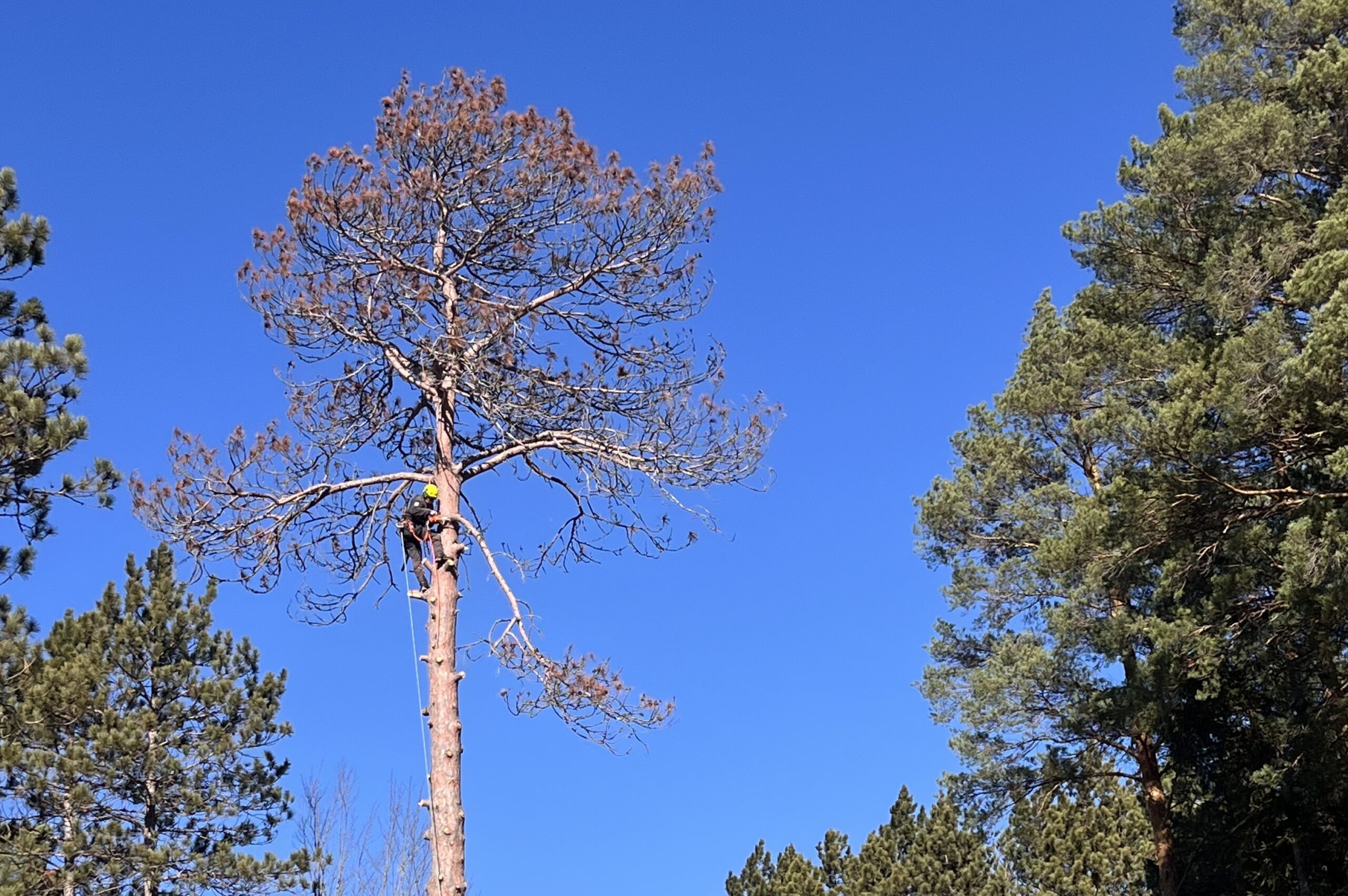
Even the largest and most well-established trees can have weak portions. Weak portions that aren’t properly addressed can be dangerous and put your property and family at risk. I am trained at implementing techniques to help improve limb structure in your trees and mitigate issues before they become condemning to the tree. Did you know that a few simple pruning cycles can save you thousands of dollars long term in young shade trees?
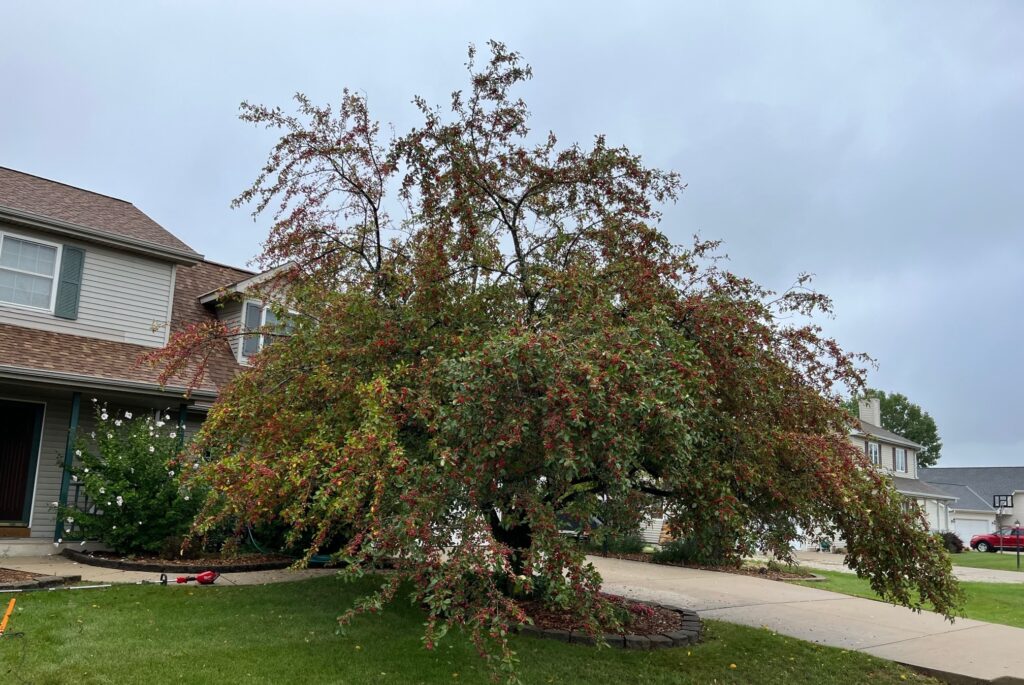
This client had a beautiful Malus spp. crabapple that was about 30 years old. This is a photo before pruning was performed in 2022, Caledonia, Wisconsin.
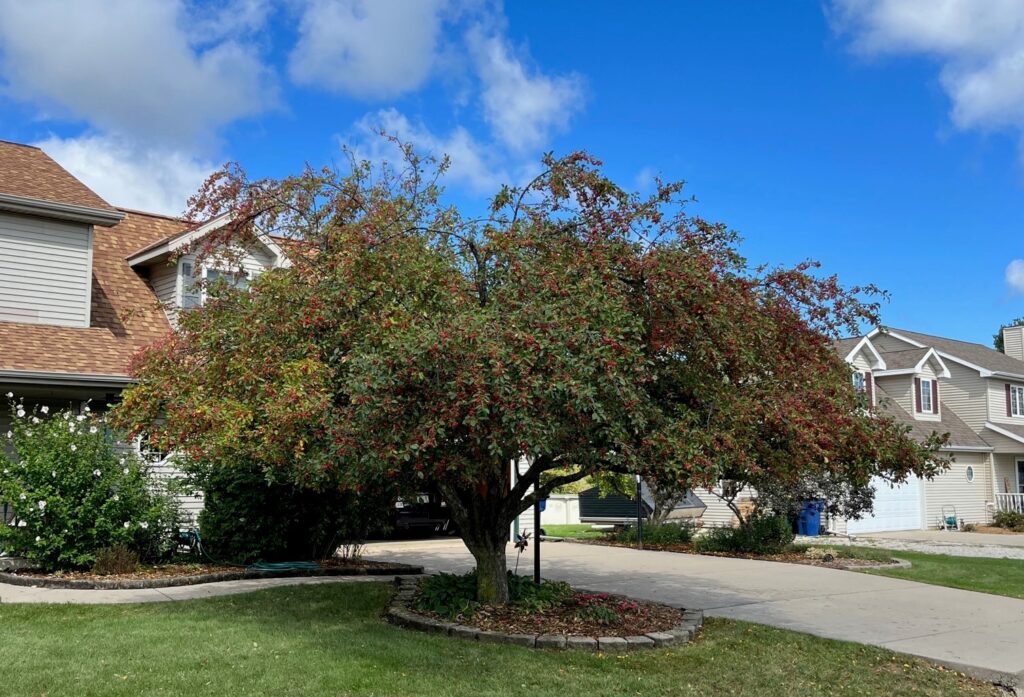
This is a photo of the crabapple after canopy reduction, structural thinning, and aesthetic balancing was performed in 2022, Caledonia, Wisconsin.
Disease & Insect Management
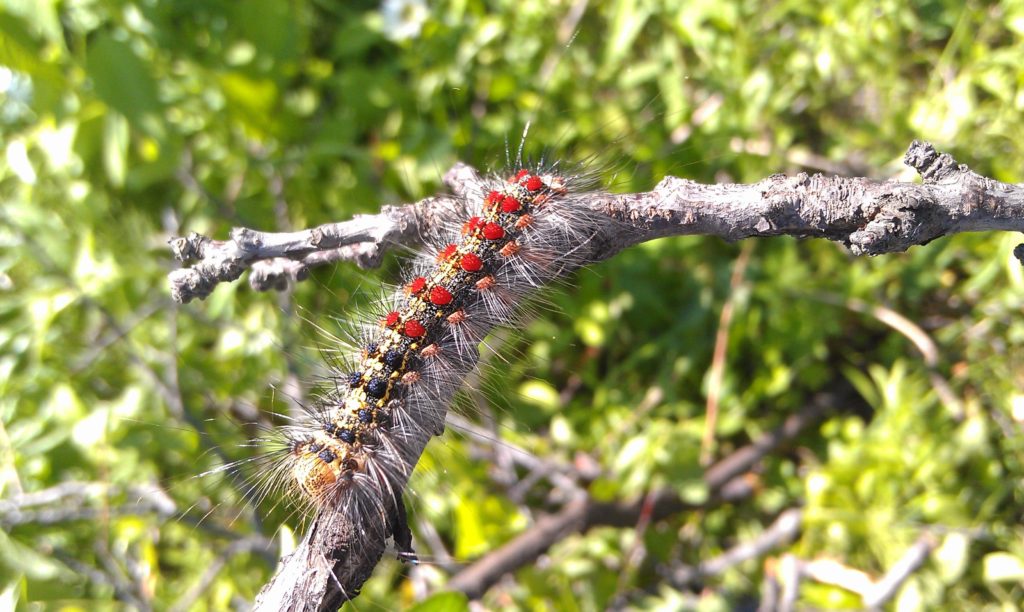
You might see a tree with wilted, discolored leaves, or cute furry caterpillars. However, I see a weakened tree suffering from an insect infestation, nutrient deficiency, or disease. For example, gypsy moths (these cute, little furry pests) can really multiply. Egg masses can hold up to 1,000 eggs, so being proactive can save you massive damage and huge maintenance costs in the future. Luckily, I am certified and trained to identify insects and diseases and recommend a custom, targeted treatment to nurse your tree back to health.
Emerald Ash Borer Preventive Maintenance
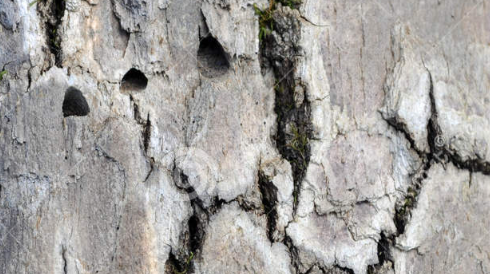
Ash trees are no match for Emerald Ash Borers, an invasive species of insects whose larvae feed under an Ash tree’s bark. Without treatment to control the insects, your ash trees will eventually die. By catching an infestation early, however, I can help save Ash trees with targeted mitigation efforts designed to battle these destructive insects.
Tree & Shrub Fertilization
Healthy trees and shrubs start with healthy habits. Trees are like us humans, when we don't get enough sleep, drink enough water, or eat right then we are more susceptible to catching a cold or a flu. Same goes for plants, being proactive about their overall health dramatically reduce the risk of more serious issues. When trees are depleted of nutrients, their roots struggle to provide them with what they need to grow. I can help you diagnose your plants and customize a treatment program to help them grow strong and create healthy roots.
F.A.Q.
At Better Tree Care, I believe in not only helping you with the care of your trees and shrubs, but creating a trusted space and room for education. Here are some of the commons questions I receive and how I might handle these requests:
Trees are slow to respond to both positive and negative changes. In many cases, by the time a problem becomes visible, it has already been developing for years. After more than a decade working in the field, I’ve seen firsthand how adverse weather conditions impact tree health. In Wisconsin, multiple growing seasons of extreme drought have placed significant stress on our trees.
Most tree issues aren’t caused by a single factor. Instead, they’re the result of multiple stresses compounding over time. That’s why I evaluate every tree individually. I conduct a thorough inspection and ask homeowners specific questions to better understand the full picture of what your tree has experienced and what it needs moving forward.
During peak summer months, proper watering is one of the best ways to reduce stress and maintain tree health. However, watering incorrectly — either too much or too little — can cause additional problems.
Here are a few simple guidelines:
Water early in the morning for best absorption and minimal evaporation.
There is no “magic schedule.” Instead, check your soil moisture.
Dig a few inches into the soil beneath the tree’s canopy (where the branches extend).
If the top inch of soil feels dry, chalky, and doesn’t stick to your fingers, it’s time to water.
Use a low and slow approach — let a hose trickle gently for 30–45 minutes to allow for deep soaking.
Keep water off the trunk and avoid soaking the leaves or needles.
Thoughtful watering and proactive care can go a long way in protecting your trees from long-term stress and decline.
The best way to care for your trees and plants is to pay close attention to them. Look for changes that might have gone unnoticed in previous years. Some signs to watch for include:
Smaller or fewer leaves than usual
Unusual colors or discoloration
Holes, spots, or other damage
Anything that simply looks “off” or out of the ordinary
If you’re new to your property or aren’t sure where to begin, don’t worry — that’s where I can help.
I offer free consultations to inspect your property and assess the current health of your trees and plants. I’ll provide guidance on what to look for and actionable steps you can take to monitor and maintain their health moving forward.
Caring for your landscape starts with understanding it — and I’m here to help you do just that.
Having a landscaper is a great way to keep your lawn and garden beds looking neat and well-maintained. But trees and shrubs require specialized care — and that’s where an arborist comes in.
As an internationally certified arborist with a degree in Urban Forestry, I am trained to assess, diagnose, and implement long-term treatment programs that keep your trees and plants healthy. My approach is proactive: I consider what your property will look like a year from now, five years from now, a decade down the line, and even for future generations.
Caring for trees is not just about the present; it’s an investment in the future. Like specialists in the medical field, arborists provide expertise beyond general maintenance, ensuring that your trees and woody plants thrive for years to come.
Numerous studies show that trees and plants provide real benefits: they improve mental health, aid physical recovery, reduce home energy costs, and even increase property values.
Beyond these measurable advantages, there are personal reasons to care for your landscape — whether it’s privacy in your backyard, shade over a deck, a stunning view, or cherished family memories.
A well-maintained property with healthy trees can be the difference between simply liking where you live and truly loving it.
To help control the moth population, residents can destroy the egg masses. The best time to do this is during the winter up until spring. Masses look like fuzzy brownish patches that can be found on tree trunks, under picnic tables, along sheds, and many other flat surfaces.
Egg masses can hold up to 1,000 eggs, so destroying them on your property can help control this pest.
There are definitely some proactive steps you can take right away if you happen to see the eggs and initial hatchings of gypsy moths. The University of Wisconsin has a management guide for home owners on gypsy moths outlining some of the steps you can take as a home owner. If your are looking for help, I can develop a custom plan to deal with them based on the level of infestation and stage of infestation.
Evergreen and Deciduous Fungal, Insect, and Bacterial Treatments
Mosquito and Tick Abatement
Emerald Ash Borer Trunk Injections
Oak Wilt and Dutch Elm Disease Trunk Injections
Nutrient Injections
Soil Health Treatments/Amendments
Growth Regulators
Herbicide Treatments on Invasive Plants
Tree Inventories
Professional Consultations
Multi-year Treatment Programs
Standard and Ornamental Pruning
Tree Removals
This is probably not the answer you are looking for… but I cannot give you an accurate price without seeing the tree in person. The types of things that effect the cost are the following: Tree size, structures near tree, hazardous, accessibility to the tree with equipment and which equipment I need.